You already know how this morning started.
The salary alert came in last night. For one second — maybe two — you felt it. That brief warmth of seeing money in your account. The plans. The rent. The things you were going to do differently this time.
And then the app opened.
Just one game. Just to get things started. I'll cash out early this time.
You watched Aviator climb. Heart pounding. Hands a little unsteady. You waited too long. The plane crashed. You told yourself it was fine, one more round, you'd recover it.
By 3am, the salary was gone.
Not most of it. Gone.
And now you're sitting here — phone in hand, account showing almost zero — trying to figure out what you're going to tell people. What excuse you'll give. How you'll survive the next three weeks until the next salary. How you'll look your family in the eye today.
Why do I keep doing this to myself?
You've asked that question before. Many times. In the dark, in the bathroom, in the quiet moments when nobody is watching and the weight of it sits on your chest like something heavy.
You've deleted the app. You know you have. More than once.
But it came back. It always comes back.
You've moved platforms. You told yourself Sportybet was the problem. Then 1xBet. Then you found Aviator and thought — this one is different, this one I can control — and it wasn't different. It never is.
You've made promises. To yourself. To God. Maybe to someone you love. And broken them. Not because you're a bad person. But because something has its hand around the part of your brain that makes decisions — and willpower alone cannot fight it.
You've watched men around you save, invest, grow. You've done the maths in your head a hundred times. If I had kept the money I've gambled in the last year, I would have... You don't finish the thought because the number makes you feel sick.
You carry this alone. Because who do you tell? Who would understand without judging you, without bringing it up forever, without looking at you differently from that day forward?
So you say nothing. And the silence makes it heavier.
And tomorrow, when a new match starts or the app sends a notification or boredom settles in like a fog — the cycle begins again.
I know all of this because I lived every single word of it.
Drop everything you are doing right now and read every word I'm about to say.
Because I'm about to share with you a simple 21-day private system that broke the cycle for me — when absolutely everything else had already failed.
There's something men who've escaped this have known for a while now.
That the problem isn't willpower. It was never willpower. The men who manage to walk away from betting for good — not for two weeks, not for a month before slipping back — they found out something that most people will never tell you.
The betting apps were built by neuroscientists. People whose only job was to engineer a product that your brain could not voluntarily leave. Aviator specifically — that rising plane, that tension, that uncertainty — was designed in a lab to hijack the exact part of your brain that feels alive.
Once you understand that, you stop blaming yourself. And once you stop blaming yourself, you can finally do something that actually works.
Hi. My name is Dele.
First thing you should know about me: I am NOT a therapist, a doctor, or a life coach. I don't have a certificate on my wall or a practice in Victoria Island. I'm just a man from Lagos who lost more money to betting than I've ever written down anywhere — and who eventually found a way out.
What I'm about to share with you took me years of pain, shame, and failed attempts to discover. I'm giving it to you in 21 days.
Let me tell you exactly how it started for me.
It was 2017. A friend at work showed me his winnings screenshot during lunch break. ₦47,000 from a ₦2,000 stake. I'd never bet before in my life. I thought it looked simple.
My first bet won.
I should have known right then that was the trap.
Within three months, I was betting every day. Within six, I was betting the day my salary landed. Within a year, I was moving between platforms — because I'd tell myself one app was "unlucky" — and I'd build up losses on the new one too.
I found Aviator and it was worse. So much worse. Because it looked like skill. It looked like you could read it, predict it, time it right. You can't. I know that now. Back then I spent hours studying patterns that don't exist.
The emotional cost was enormous.
I stopped going out. I didn't want to spend money on things that weren't bets. I became quiet, distant, unavailable. People who were close to me noticed I had changed and didn't know why. I gave excuses — work stress, tiredness, life.
The real reason was that I had lost ₦180,000 the previous weekend and I was sick with shame.
There was a night — a specific night I will never forget — when I sat in my room after losing three months of savings in five hours. I stared at my phone. Zero balance. I had borrowed money from someone that week to "invest" and I'd lost all of it too.
I just sat there. Not crying. Not moving. Just... empty.
My uncle called me that weekend. He could hear something in my voice. He said something I've never forgotten:
"Dele, a trap doesn't feel like a trap when you're inside it. It feels like the only thing that makes sense."
I didn't tell him what was happening. But I wrote those words down. I still have them.
I tried everything to stop. I mean everything.
I deleted the app. Three times. The longest I lasted was eleven days before I reinstalled it, told myself I'd play "small small", and lost ₦45,000 in a night.
I tried self-exclusion on one platform. They made it so easy to just create a new account. I was back inside in under an hour.
I tried the motivational approach. YouTube videos. Podcasts. Inspirational quotes saved on my phone. They'd work for a morning. By evening, when boredom or a notification hit, I was back.
I tried keeping myself busy. Work. Gym. Calling people. But the thought was always there in the background — just waiting for me to be alone.
I tried telling myself it was about the money — that I just needed to "win back" what I'd lost and then I'd stop. You already know how that ends. I lost more trying to recover than I'd lost before I started trying to recover.
I tried cold turkey with a strict schedule. Made it eighteen days. Fell apart on a Saturday when a big match was on and my fingers just... opened the app. Like they had their own decision.
Nothing worked. Not because I was weak. I now understand why. But back then, I just felt like I was broken in some specific way that meant I would never be free of this.
Then I met a man called Mr. Emmanuel.
He was a retired counsellor. Sixty-something. Quiet man. He was at a community gathering I attended with my family — one of those long Saturday things you go to because someone will notice if you don't show up.
I ended up sitting near him during the food part. He looked at me for a long time and then said, very simply:
"You're carrying something heavy, son. I can see it."
I don't know why I told him. Maybe it was because he was a stranger and I'd never see him again. Maybe it was because I was exhausted from holding it alone. I told him — not everything, but enough.
He nodded slowly. He didn't look shocked. He didn't look disappointed. He just said:
"Every method you've tried treats the behaviour. Nothing you've tried treats the brain. The betting apps rewired your dopamine system. You can't fight a rewired brain with willpower. You fight it by rewiring it back — deliberately, with a system, over time."
He told me about the concept of trigger mapping. About the 72-hour pattern break. About accountability shadows. About why salary day is statistically the most dangerous day for a man in my situation — and how to build a wall around it before it arrives.
I sat there listening and part of me thought: this sounds too simple.
He laughed when I said that. He said:
"The things that actually work always do."
I went home that night and started. Not perfectly. Not confidently. But I started.
The first three days were the hardest. I felt physically restless. Anxious. Like something was missing. I now know that's real withdrawal — from a dopamine loop, not a character flaw.
By Day 7, the restlessness was quieter.
By Day 14, I had money in my account that was still there.
The moment I knew something had genuinely changed was Day 19.
My salary landed. I got the alert. And I sat with it for a moment — waiting for the familiar pull toward the app. The automatic reaching. The fingers that always seemed to know where to go.
It came. Softer than usual. But it came.
And then — for the first time in years — I chose something else. I followed the protocol I had built. I transferred money to savings immediately. I called my accountability person. I went for a walk.
The urge passed. Within 20 minutes. Like a wave that came and went without me drowning in it.
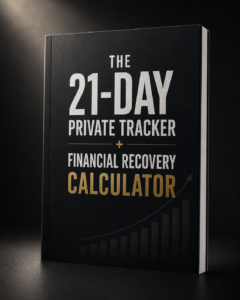
I sat down later that evening and did something I had never done before. I calculated the real total I had lost to betting over 3 years. I had been avoiding that number for a long time.
When I saw it, I felt something I didn't expect. Not more shame. Clarity. Like finally seeing the size of the thing I'd been hiding from. And knowing — now that I could see it clearly — that I had already started walking away from it.
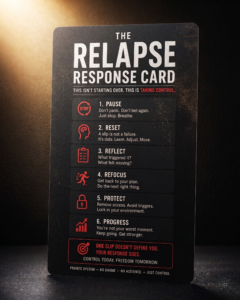
I'm not going to tell you the journey was linear. There were hard days. There was one night I came very close. But I had a Relapse Response Protocol ready — and it stopped a single bad moment from becoming another lost salary.
People around me started to notice I was different. Quieter in a better way. More present. More reliable.
One person I trusted — someone who had seen me at my worst without knowing the full story — said to me one evening:
"I don't know what changed but you seem like yourself again."
That was the real win. Not the money saved, though that matters enormously. The real win was becoming recognisable to the people who loved me. And to myself.
After I got out, I started getting messages. From people who had heard something through one connection or another. Men who were in the same place I had been. Men who had tried everything. Men who were too ashamed to speak to anyone officially but who desperately needed to speak to someone.
I couldn't personally walk every man through the system one by one. So I did the only thing that made sense.
I wrote it all down.
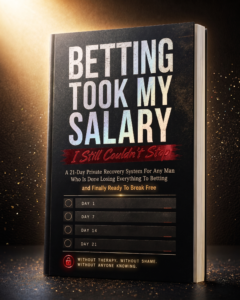
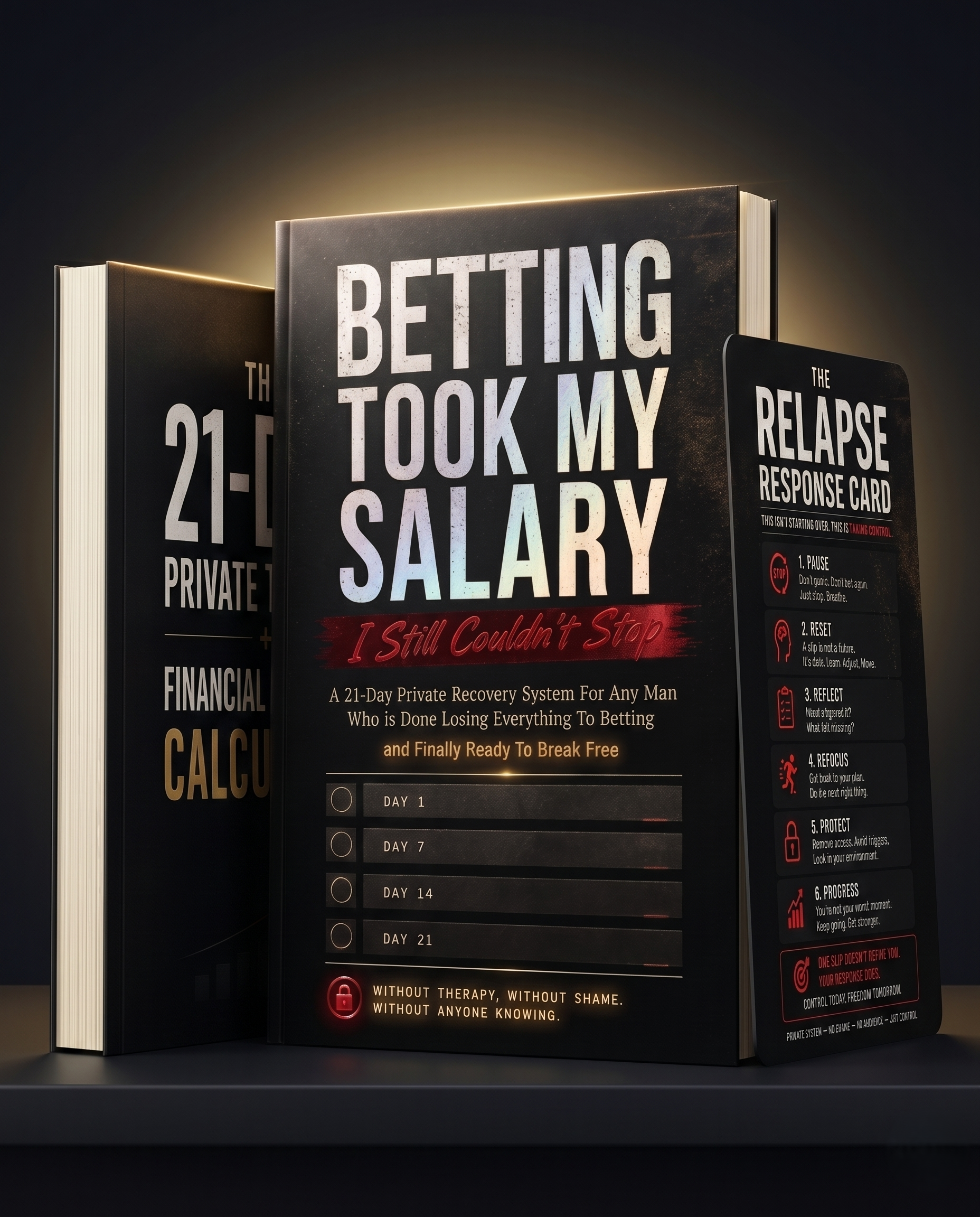
Every step. Every tool. Every protocol. The science behind why it works. The personal experience behind why I know it does. I put it into one simple, private guide that any man can read on his phone — without anyone knowing he has it, without booking a session, without sitting in a room full of strangers admitting what's happened to him.
🔒 Nigeria: Nestuge | 🌍 All Africa: Selar | 📱 Instant delivery to your email | 🛡️ 30-Day Money-Back Guarantee

📝 Share Your Experience